
- 1.
- 2.Accidentals
- 3.The C Major Scale
- 4.The G Major Scale
- 5.The D Major Scale
- 6.
- 7.Degrees of the Scale
- 8.The A, Bb, and Eb Scales
- 9.Recognizing A, Bb, and Eb
- 10.
- 11.Recognizing A Minor, D Minor, and E Minor
- 12.The E and Ab Scales
- 13.Recognizing E and Ab Major
- 14.Harmonic and Melodic Minor Scales
- 15.Recognizing Harmonic and Melodic Minor Scales
- 16.Scales and Key Signatures
- 17.Scales and Key Signatures (continued)
- 18.Transposition
Whole Steps and Half Steps
A whole step is two half steps.
A half step is the smallest interval between two notes.
There are two half steps in a whole step.
An interval is the distance between two notes.
Half Steps
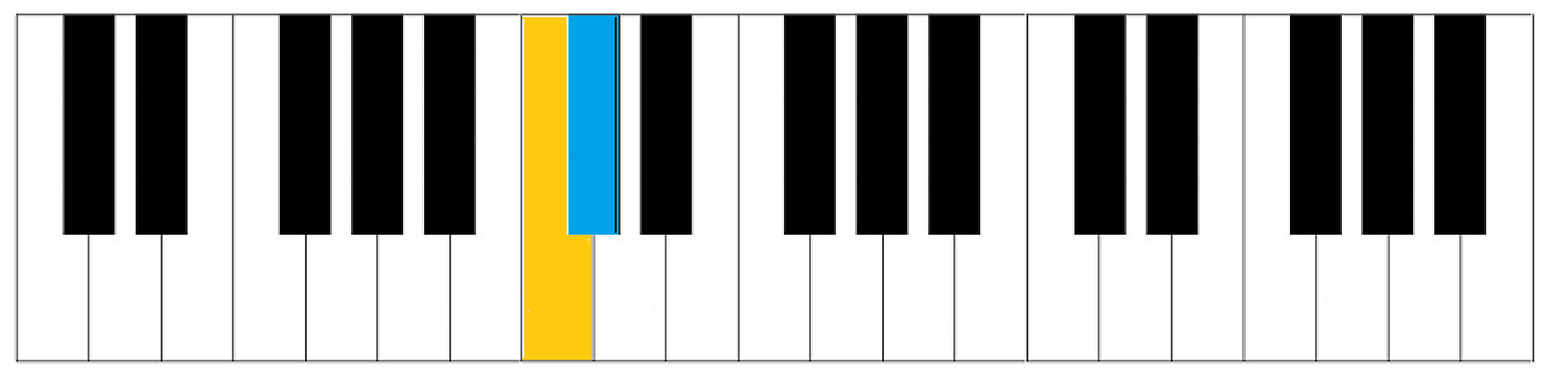
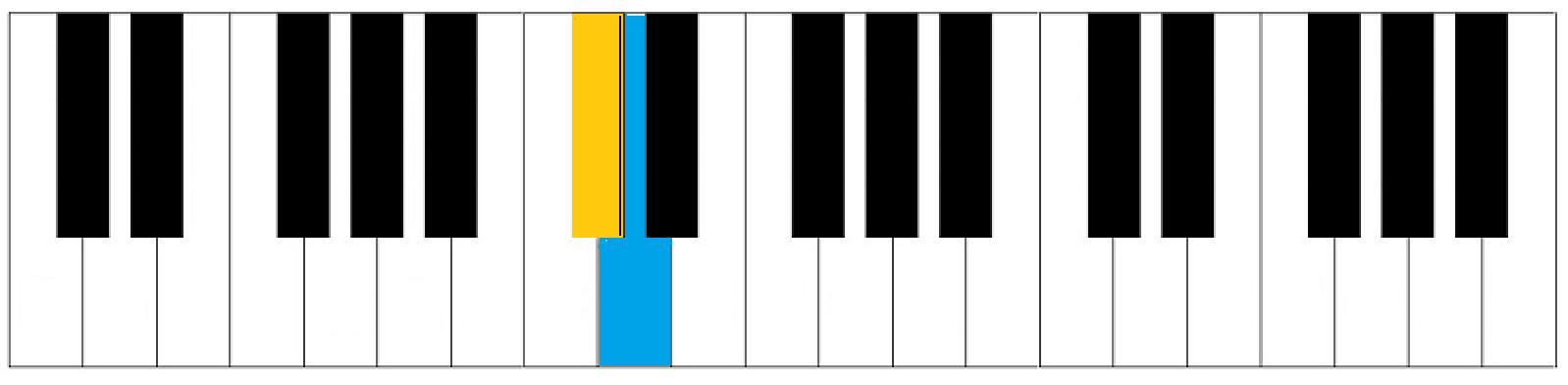
The distance between any note and its nearest neighbor note is called a "half step".
For example:
- C to C#
- C# to D
In this case, the note is either a white note to a black note, or black to white.
These opposite colors are typical of half steps, however there are two exceptions.
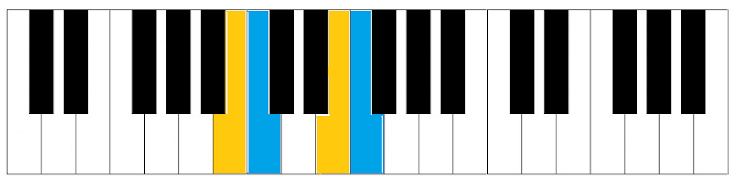
The white to white half steps are:
- E to F
- B to C
Try playing these half steps on your piano.
Whole Steps
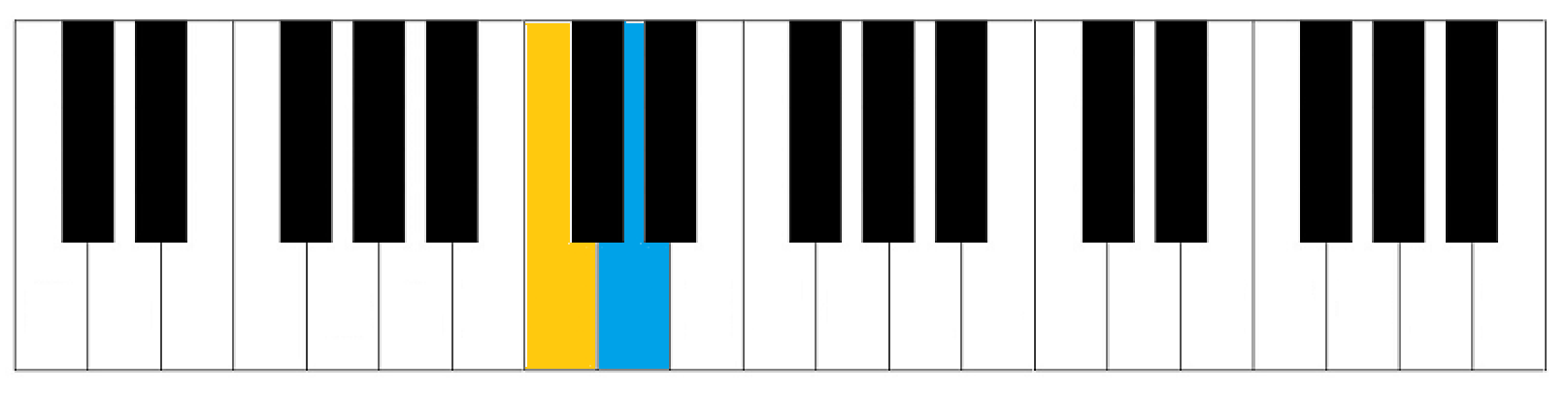
A whole step is made up of two half steps.
For example:
- C to D
- C# to D#
In this case the note is either a white note to a white note, or black to black.
These same colors are typical of whole steps.
Remember the exception: E to F and B to C are half steps.
Try playing these whole steps on your piano.
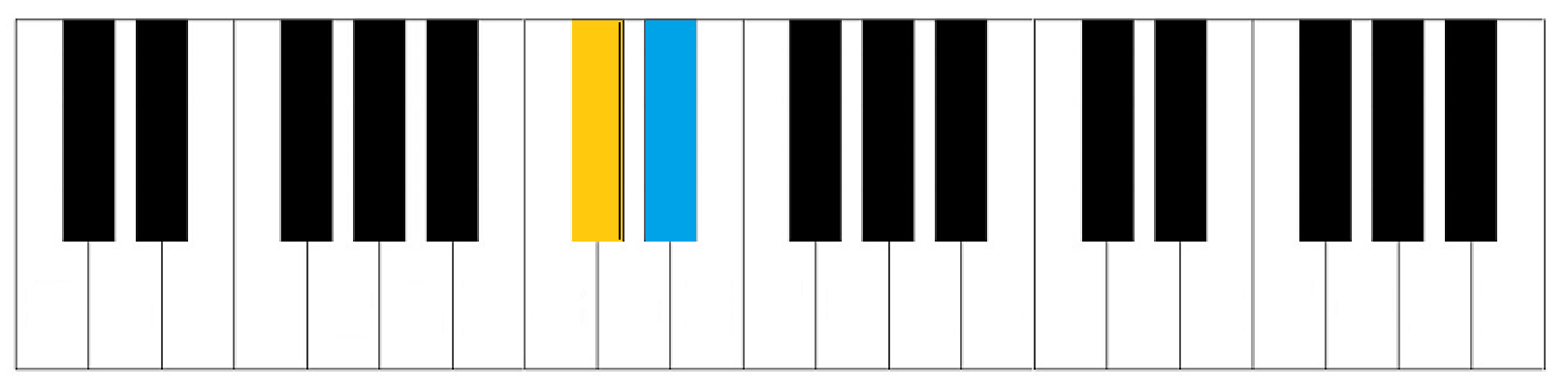
Quick Quiz
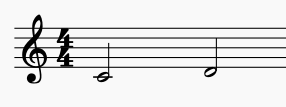
What is the interval above?
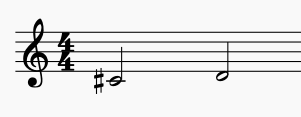
What is the interval above?
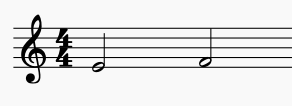
What is the interval above?
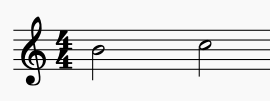
What is the interval above?
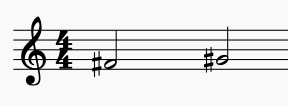
What is the interval above?
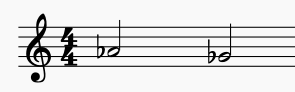
What is the interval above?
Accidentals
The C Major Scale
The G Major Scale
The D Major Scale
The F Major Scale
Here is the F major scale:

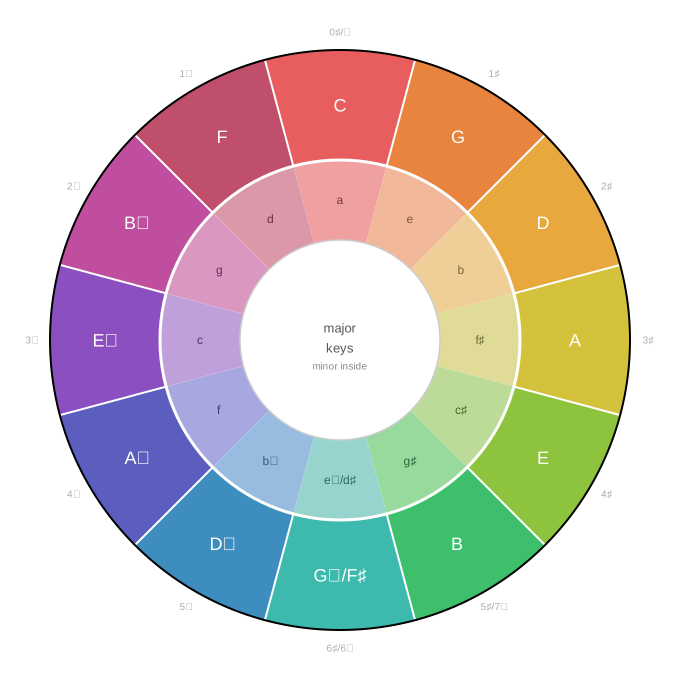
The Circle of Fifths
The Circle of Fifths shows every major and minor key.
It is like a clock face with 12 numbers, except the numbers are replaced by the letters of each scale.
The major keys are on the outside of the circle, and the minor keys are on the inside.
Notice that F major is in the 11 o'clock position.
You may also notice that the flat keys are on the left side of the circle, and the sharp keys are on the right.
The "F" is 5 notes lower than the next key, C (i.e. it is a fifth lower, hence "circle of fifths").
Its key signature has one flat, i.e. Bb.
Degrees of the Scale
The F major scale has 8 notes, including the top note.
The first note in any scale is called the first degree of the scale.
The second note is called the second degree of the scale, and so on.
The 1st and 8th notes are the same note, i.e. F.
Major Scales: Whole Steps and Half Steps
Every major scale has the same pattern of whole steps and half steps.
The pattern is: whole step, whole step, half step, whole step, whole step, whole step, half step.
In short, the half steps occur between the 3rd and 4th degrees of the scale, and the 7th and 8th.
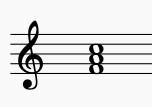
The F Major Triad
A triad is three notes played together in harmony.
A triad is made up of the 1st, 3rd, and 5th degrees of the scale.
An F major triad, for example, is made up of F, A, and C.
A triad is a type of chord.
Quick Quiz
What is the first degree of the F major scale?
What is the fifth degree of the F major scale?
What accidental does F major have?
Between which two degrees does the first half step in F major occur?
Which note is the middle note of the F major triad?
True or False: F major is at the 11 o'clock position on the circle of fifths.
Degrees of the Scale
The A, Bb, and Eb Scales
Recognizing A, Bb, and Eb
Minor Keys: A, E, and D
In this unit you'll learn the minor keys of A, E, and D.
There are two main types of minor key: harmonic and melodic.
We'll cover melodic minors at a later stage, but for now remember that we are learning the harmonic minors.
Here are the three minor scales on the Circle of Fifths which are relevant in this unit (see the inside of the circle):
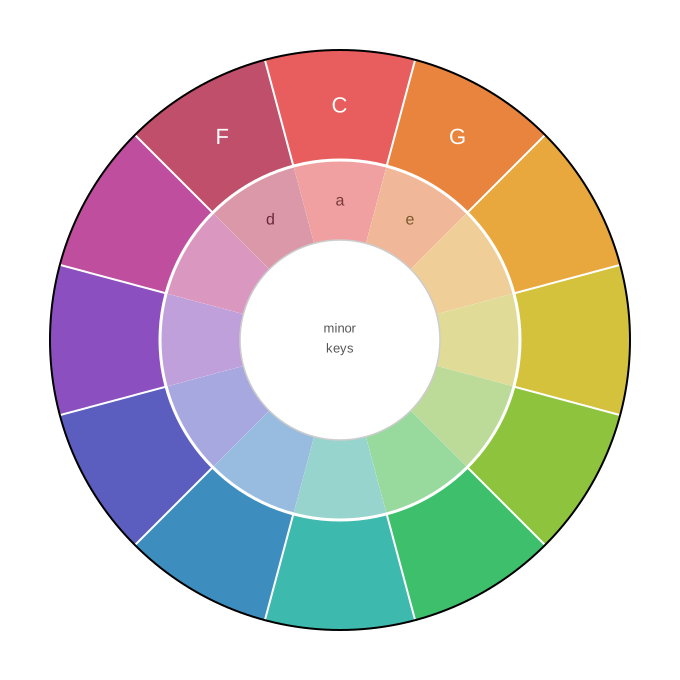
The Circle of Fifths: Minor Keys
Notice that A minor appears directly below C major.
This is because these keys are related: they have similarities and differences.
In fact, we say that A minor is the "relative minor" of C major.
We also say that C major is the "relative major" of A minor.
Finding the Relative Minor
We find the relative minor by identifying the 6th degree of the major scale.
For example, if we want to find the relative minor of C major, we identify that the 6th degree of the scale is A (see below).
The relative minor of C major is A minor.
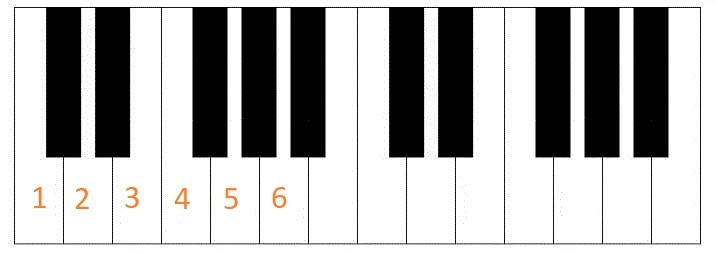
E and D Minors
Can you name the relative minor of the following keys by identifying the 6th degree:
1) G major
2) F major
A: The relative minor of G major is E minor, and the relative minor of F major is D minor.
You can find this on the Circle of Fifths above.
Relative Minors: Similarities and Differences
The similarity between the relatives is that each of the notes are the same, except one: the 7th degree of the minor scale.
This means that when you play the A minor scale, the notes are the same as C major — but the 7th degree is different.
The 7th degree is raised by a half step.
In A minor, the 7th degree is G — so it becomes G sharp.
The notes in A minor are therefore:
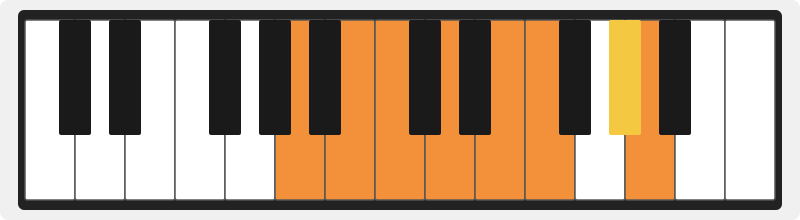
A B C D E F G# A
Notice that the G sharp is the only note that differs from C major.
In the example below, the common notes between the relatives appear in orange, and the difference (#7) in yellow:
C Major Scale
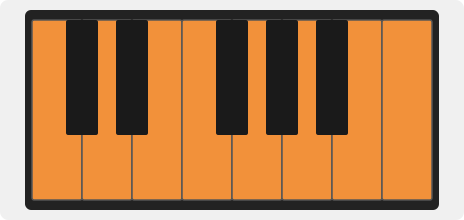
A Minor Scale
Quick Quiz
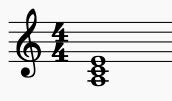
Which key is the triad above?
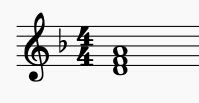
Which key is the triad above?
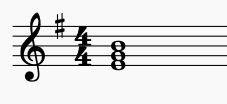
Which key is the triad above?
Recognizing A Minor, D Minor, and E Minor
The E and Ab Scales
Recognizing E and Ab Major
Harmonic and Melodic Minor Scales
Recognizing Harmonic and Melodic Minor Scales
Scales and Key Signatures
Scales and Key Signatures (continued)
Transposition
Continue with Piano Scales
18 quizzes in this grade
$17one-time